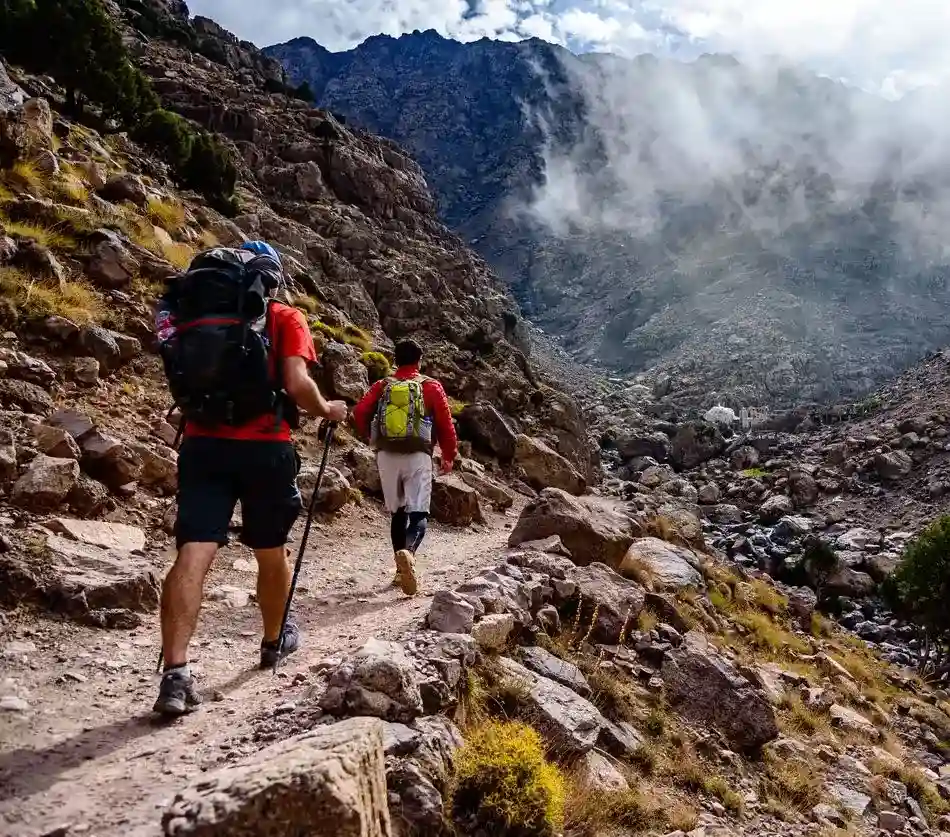
Discover Taghia, a remote Amazigh village surrounded by towering limestone cliffs in Morocco’s High Atlas. Learn when to visit, how to get there, where to stay and what climbing equipment to bring.
Discover Taghia, Morocco’s Legendary Climbing Destination
Hidden deep in Morocco’s High Atlas Mountains, Taghia is a small Amazigh village surrounded by spectacular limestone walls rising hundreds of metres above the valley.
The village sits in an isolated natural setting between mountains, canyons, terraced fields and impressive rock formations. A powerful mountain spring supplies water to the village and contributes to the surprising greenery of this remote landscape.
For experienced climbers, Taghia is much more than a climbing destination. It is a place where daily life follows a simple rhythm: wake up, eat, walk to the cliffs, climb, return to the guesthouse, share dinner and prepare for the next adventure.
What Is Taghia Like?
Taghia offers a peaceful atmosphere far removed from busy cities and crowded tourist destinations.
The village is known for its welcoming inhabitants, traditional mountain lifestyle and remarkable natural surroundings. Rest days can be spent relaxing on a guesthouse terrace, walking through the village or discovering the nearby canyons and mountain paths.
Communication is often a mixture of Arabic, Tamazight, French, Spanish, English and gestures. These simple exchanges are part of the authentic experience of staying in the village.
Why Is Taghia Famous Among Climbers?
Taghia is internationally known for its long limestone climbing routes.
The surrounding walls offer:
Long multi-pitch climbing routes
Sport climbing and semi-equipped routes
Traditional climbing opportunities
Technical limestone walls
Remote approaches through canyons and mountain trails
Routes requiring endurance, experience and careful preparation
Many climbing days include several hours of approach and return walking, followed by hundreds of metres of technical climbing.
Taghia is therefore better suited to autonomous and experienced climbers who understand multi-pitch systems, rappelling, route finding and mountain safety.
Best Time to Go Climbing in Taghia
The most suitable climbing periods are generally spring and autumn.
Spring usually offers pleasant temperatures, greener landscapes and longer daylight hours. The long days can be particularly useful when completing routes that require a significant approach, several hours of climbing and multiple rappels.
Autumn may also provide good climbing conditions, although the days gradually become shorter.
Summer can be extremely hot on exposed walls, while winter may bring cold temperatures, snow and difficult mountain conditions.
Weather in the High Atlas can change quickly. Climbers should always check the latest local forecast and ask their guesthouse or local contacts about current conditions before entering a route.
How to Get to Taghia
Travelling to Marrakech
Marrakech is the main arrival point for most international visitors travelling to Taghia.
From Marrakech, travellers generally continue towards Azilal and then Zaouiat Ahansal using public transport, a shared taxi or a privately arranged transfer.
Marrakech to Zaouiat Ahansal
Public transport can be economical, but the journey may require several connections and considerable travel time.
A pre-arranged transfer is generally simpler, especially for groups carrying ropes, climbing equipment and large bags. Many guesthouses in Taghia can help organise transport from Marrakech.
Travellers should confirm the current route, departure point, price and travel conditions directly with their accommodation before leaving.
Walking from Zaouiat Ahansal to Taghia
The final section of the journey is normally completed on foot through the mountain landscape and gorges leading to Taghia.
Depending on pace and conditions, the walk usually takes several hours. Hiring a local muleteer is a practical option for transporting ropes, backpacks and climbing equipment.
Using local transport and mule services also contributes directly to the economy of the surrounding villages.
Where to Stay in Taghia
Several family-run guesthouses operate in the village.
Accommodation is generally simple, friendly and adapted to the needs of hikers and climbers. Many guesthouses offer half-board, including breakfast and a traditional evening meal.
Before confirming a reservation, it is advisable to verify:
The exact name and location of the guesthouse
What meals are included
Whether transport can be organised
Whether mules can be arranged
Access to drinking water
Electricity and charging options
Wi-Fi or mobile network availability
The distance from the main climbing sectors
Guesthouses may change their services over time, so current information should always be confirmed directly with the host.
Food and Water in Taghia
Meals in Taghia are usually based on traditional Moroccan cuisine.
Breakfast may include bread, pancakes, olive oil, tea and other local products. Dinner often consists of filling dishes such as tajine, couscous, soup or omelettes.
Because climbing routes can be long, visitors should bring enough snacks for the day. Energy bars, dried fruit, nuts and other lightweight foods are useful on multi-pitch routes.
The village receives water from a natural mountain spring. However, the distribution and storage systems may differ between guesthouses.
Travellers who are uncertain about water quality should use an appropriate filter or water-purification method.
Shops and Supplies
Taghia has only limited access to shops and specialist supplies.
Small village stores may sell basic food and daily necessities, but visitors should not expect to find climbing equipment, technical clothing or a wide selection of products.
Climbers should purchase all essential supplies before leaving Marrakech. This includes personal medication, batteries, repair materials, sun protection, toiletries and climbing equipment.
Recommended Climbing Equipment
The required equipment depends on the selected routes, but a typical climbing kit may include:
Double ropes suitable for long rappels
A reliable single rope where appropriate
Harness, helmet and climbing shoes
Belay and rappel devices
Quickdraws and extended alpine draws
Locking carabiners and personal safety equipment
Slings and anchor-building materials
Cams and nuts for traditional or semi-equipped routes
Haul bag or durable climbing backpack
Headlamp with spare batteries
Warm layers and waterproof protection
Sufficient food and water
First-aid and emergency equipment
Offline maps, route descriptions or a climbing guidebook
Taghia’s limestone can be abrasive, so ropes, haul bags and other textile equipment should be checked regularly for damage.
Even during warm periods, climbers may encounter significant temperature differences between the valley, shaded walls and high-altitude summits.
Prepare Carefully for Your Taghia Climbing Trip
Taghia rewards climbers with extraordinary routes, dramatic scenery and a rare feeling of isolation.
However, its remote location requires serious planning. Visitors must be prepared for long approaches, changing weather, limited supplies and complicated evacuations.
Choose routes that match your technical level, carry the necessary equipment and obtain recent information from reliable local contacts.
With the right preparation, climbing in Taghia can become one of the most memorable mountain experiences in Morocco.